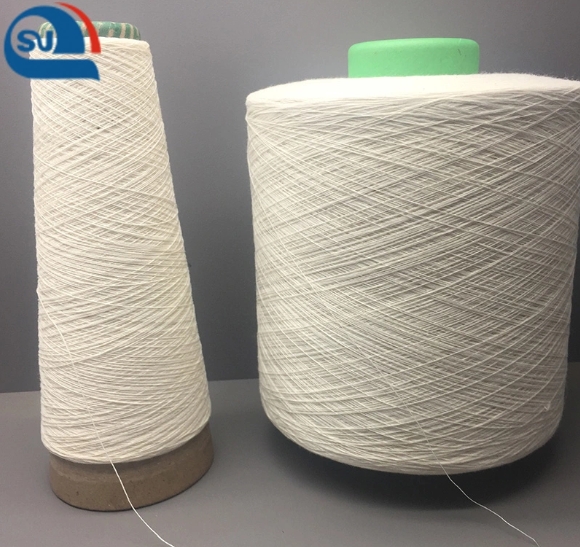
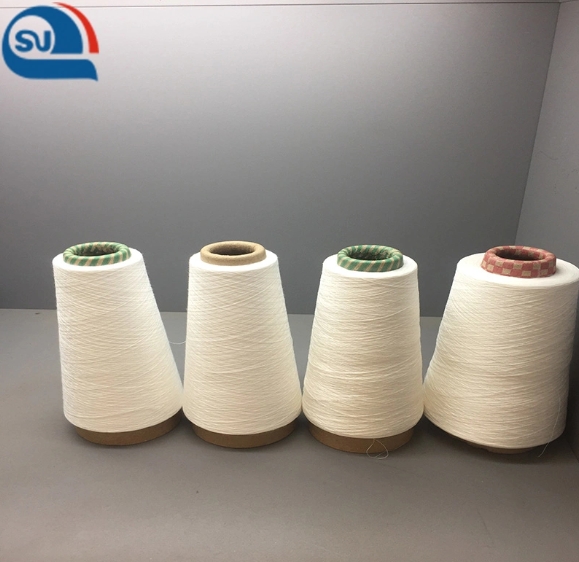
A new solution to the pain points of polyester yarns
—High-stability blending breaks the dual pressure of cost and quality
Industry pain points: The external dependence of raw material PTA is as high as 34%, and the price fluctuates violently; labor costs are rising, and low-price competition is unsustainable; terminal inventory is high, and some factories are forced to close early. Your troubles: Traditional polyester yarns are easy to pill, difficult to dye, and difficult to clean after being stained with oil; blended yarns have a single function and it is difficult to balance strength and comfort; dyed yarns have insufficient color fastness and fade after repeated washing. Our solution:
Innovative blending technology: Taking Polyester Viscose Blend Yarns as an example, the 70% cotton + 30% polyester structure has both hygroscopicity and tear resistance, suitable for outdoor furniture and environmentally friendly clothing;
Function upgrade: The dyed yarn adopts nano-level coloring technology to improve color fastness and chemical resistance; the all-polyester yarn adds light stabilizer to alleviate UV aging;
Flexible production: Support small batch customization of fineness (20S-60S) and recycled raw material adaptation to reduce supply chain risks. Actual effect: After a weaving factory in Zhejiang adopted it, the raw material cost was reduced by 12%, and the order delivery cycle was shortened by 15%; the number of washes of the finished cloth increased by 50%, and the oil residue rate decreased by 80%.
Product Features and Tips
Features:
1. High strength and low shrinkage: 100% polyester yarn has a tensile strength of 450-800cn and a shrinkage rate of <3%, which is suitable for durable scenes such as protective clothing, luggage, etc.;
2. Ecological adaptability: Recycled bottle flake spinning technology improves the utilization rate of raw materials, and the biodegradable proportion of blended yarn exceeds 40%;
3. Functional innovation: Photochromic polyester yarn responds to ultraviolet rays and intelligently adjusts the light transmittance of the fabric.
Maintenance tips:
1. Low temperature washing: water temperature ≤30℃, avoid high temperature causing fiber hardening;
2. Avoid exposure to the sun: spread flat in a cool and ventilated place to dry to prevent ultraviolet degradation;
3. Neutralize detergent: Use pH neutral detergent to reduce dirt adsorption caused by polyester lipophilicity.
Maintenance Guide: Put it in a gauze bag to prevent friction when washing by machine; keep it away from light and moisture when storing, and blended yarn needs to be dehumidified regularly; ironing mat cloth for insulation (≤110℃).